Make standing at the edge harder.
Look for shallow shelves, stepping stones, and open banks where a bird can pause and fish. Use safe edge protection and planting suited to your pond to interrupt the easiest approach.
 tallGuard
Pond protection
Herons are patient, observant, and quick to learn a routine. The best heron deterrents for ponds combine safe physical protection, fish refuge, and varied responses that make landing, approaching, and spotting fish less predictable.
Start with the pond
Physical pond protection comes first. tallGuard can add local early warning, evidence, and a configured response, but it cannot guarantee prevention or replace safe cover and barriers.
Four practical principles
No two ponds or visiting birds behave exactly alike. Start with the most obvious access point, make one change at a time, and review what your camera or pond observations show.
Look for shallow shelves, stepping stones, and open banks where a bird can pause and fish. Use safe edge protection and planting suited to your pond to interrupt the easiest approach.
Fish need cover as well as open, healthy water. Use appropriate pond planting and refuges, and avoid introducing invasive species simply for extra cover.
Decoys, moving ornaments, surface ripples, and floating movement can add uncertainty. Move or vary them regularly because a familiar object soon becomes part of the scenery.
A motion-activated sprinkler can interrupt an approach without harming wildlife. tallGuard can provide a local detection and configured response layer alongside it.
Practical examples
These are examples, not a prescription for every pond. This page contains affiliate links. If you buy through them, I may earn a small commission at no extra cost to you.

1. Low-profile barrier
A subtle, low-visual-impact way to interrupt a heron's preferred approach. I run fishing line across likely edge routes to make it harder to walk up to the pond, and it also discourages a direct swoop into the water.
It works best as one layer in a broader setup. Keep lines taut and visible, check them regularly, and avoid arrangements that could entangle wildlife.
View product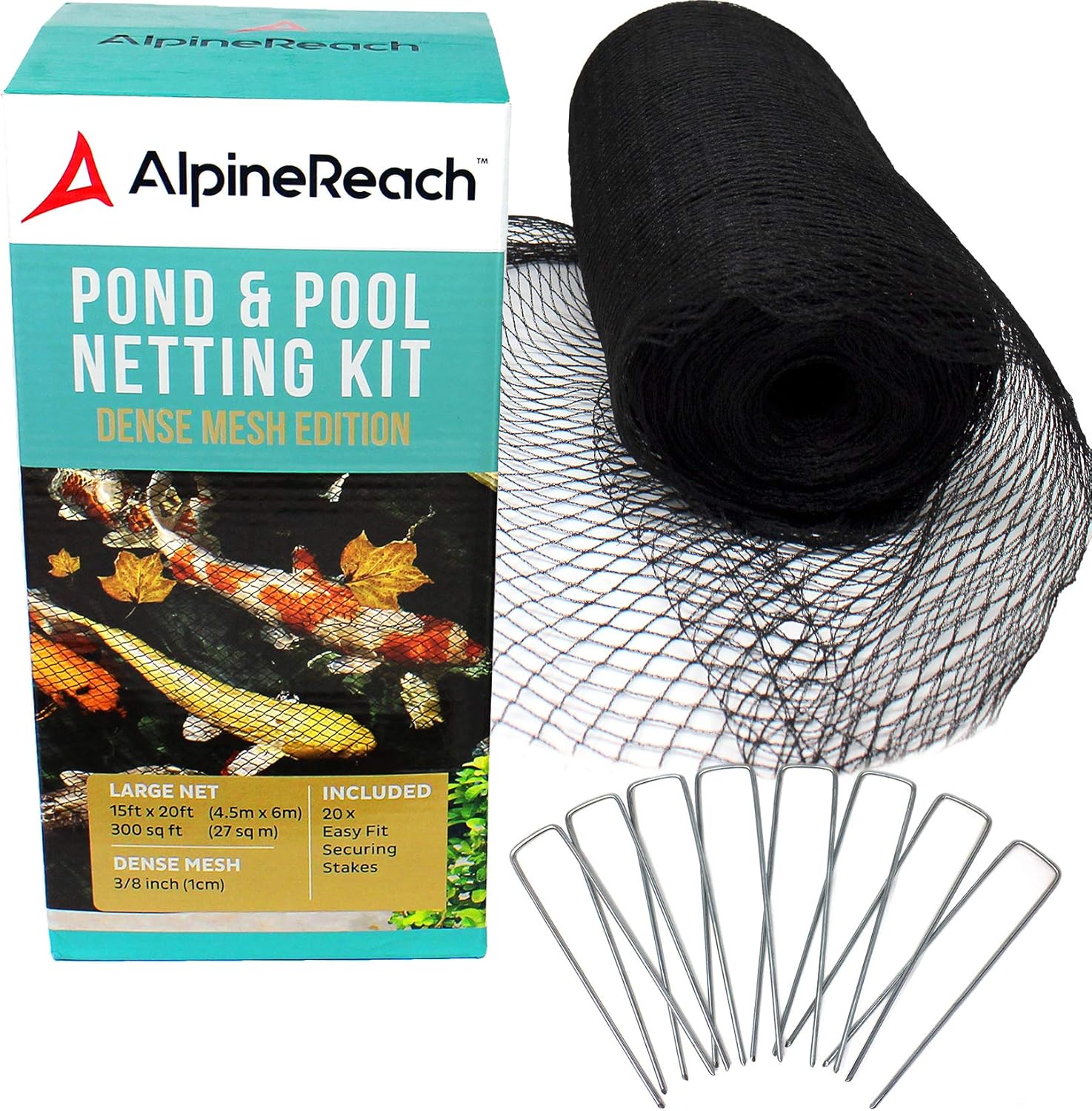
2. Physical pause
Netting creates a physical pause between a heron and your fish. For smaller, tidier ponds it can be a dependable layer of protection, but on a large pond it can be visually intrusive and pond plants eventually grow into it.
I see it as a way to slow a heron down, buying tallGuard time to detect the visit and respond. Over time, that repeated interruption can make the pond a less attractive target. Inspect it regularly so wildlife cannot become trapped.
View product
3. High-point decoy
This makes a useful high-point feature around the pond and is particularly effective at making seagulls think twice. Seagulls can be determined around fish, so it earns its place even if pigeons largely ignore it.
I mount mine on a tall pole, where it is more visible and may add a little uncertainty for a passing heron too. Its effect on herons will vary, so treat it as one layer rather than a guarantee.
View product
4. Moveable garden decoy
This is the deterrent that looks most at home in the garden. It adds character around the pond while offering a short-term visual interruption for visiting herons.
The important part is movement: relocate it regularly, because herons quickly learn when a decoy is harmless. Even once it loses its deterrent value, it remains an attractive garden ornament.
View productPlan for the pond you have
New pond
Before stocking fish, consider accessible edges, underwater cover, planting, and a safe way for wildlife to leave the water if it falls in.
Established pond
Improve cover, move visual deterrents, and address one obvious approach route before changing the structure of a mature pond.
Every pond
Use sightings and tallGuard records to see where a heron arrives, stands, and hunts, then adjust the plan without disturbing wildlife unnecessarily.
Questions before you build
Yes. Fish cover, safe edge protection, and suitable barriers remain the foundation of pond protection. tallGuard adds local early detection, evidence, and a configured response alongside those measures.
No. tallGuard cannot guarantee prevention and does not replace responsible physical pond protection. Use wildlife-safe barriers and inspect them regularly.
No. Heron detection runs locally on the pond hardware. tallGuard uses authenticated outbound connections for alerts and updates, so the camera does not need a public internet address or router port forwarding.
The Community Edition uses a compatible Raspberry Pi 4, camera, Coral Edge TPU, power, network access, weatherproof mounting, and your chosen deterrent. See the installation guide for the current build list and limitations.